100% biodegradable agricultural
polymer within 1 year
The only 100% natural and biodegradable polymer
EF Polymer works where synthetic polymers degrade soils.
Of organic origin, it integrates into the soil without persistent pollution, contributes to humus formation and complies with sustainable agricultural practices.
The benefits of EF Polymer
Up to 40%* water savings
EF Polymer retains water close to the roots and limits losses through infiltration and evaporation. Farmers reduce their water input by a *proven 20–25% and up to 40%, depending on crops and soil conditions.
Up to 20% less fertilizer
By maintaining moisture in the root zone, EF Polymer improves nutrient availability. Fertilizer requirements are reduced by 20% without compromising crop performance.
Significant additional yield
The use of the polymer optimizes water resource allocation, enabling the plant to redirect energy toward fruit production rather than root development, resulting in significant gains (e.g., for tomatoes: +46% marketable yield).
100% biodegradable within 12 months
Unlike synthetic polymers, EF Polymer fully degrades in approximately one year, without microplastics or residues. It improves soil structure and organic matter, making it fully compatible with sustainable agriculture.
How does EF Polymer work?
Osmotic hydro-retention mechanism
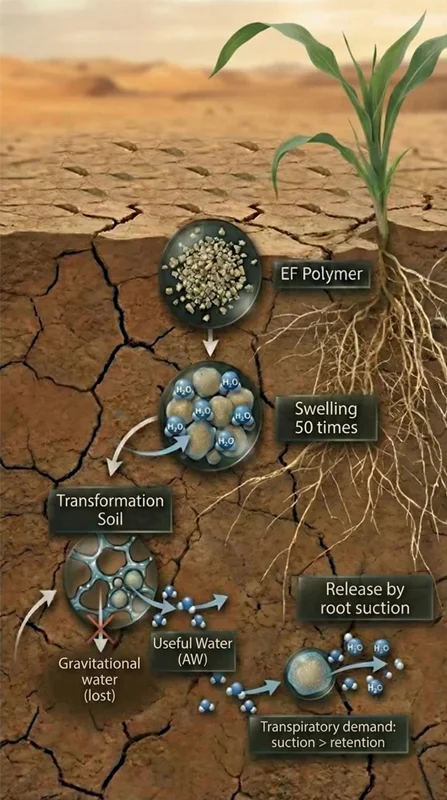
The cross-linked molecular structure of EF Polymer creates osmotic pressure that attracts and traps water molecules (H₂O) within its matrix, swelling up to 50 times its dry weight.
Soil transformation
By integrating into the substrate, the polymer modifies the soil water retention curve (pF). It converts gravitational water (normally lost) into Plant Available Water (PAW).
Release through root suction
Water is not permanently sequestered. The polymer acts as a buffer reservoir. When the plant’s water potential decreases (transpirational demand), root suction becomes stronger than the polymer’s retention force, releasing water on demand.
Soil revitalization (SOM/SOC)
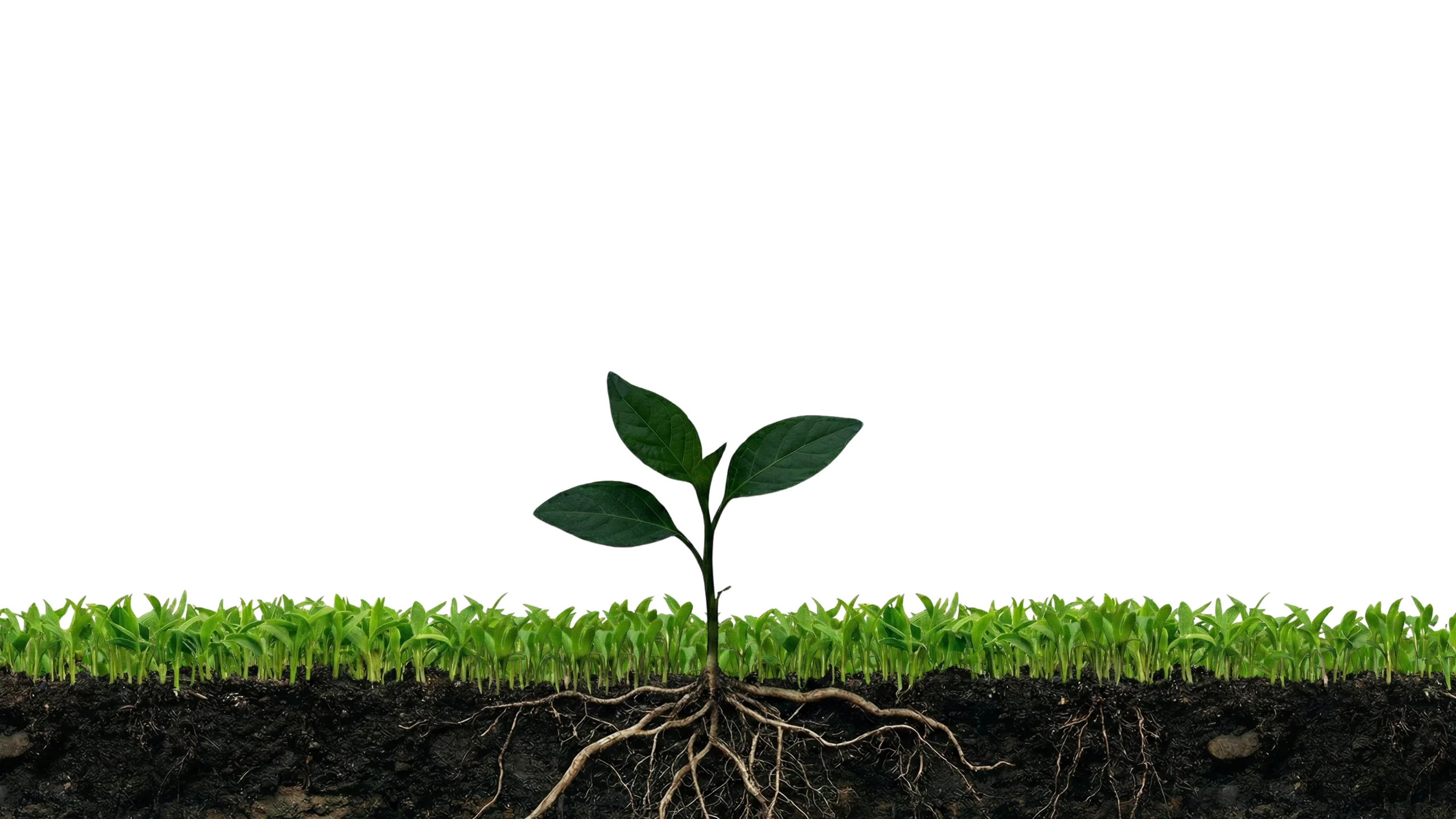
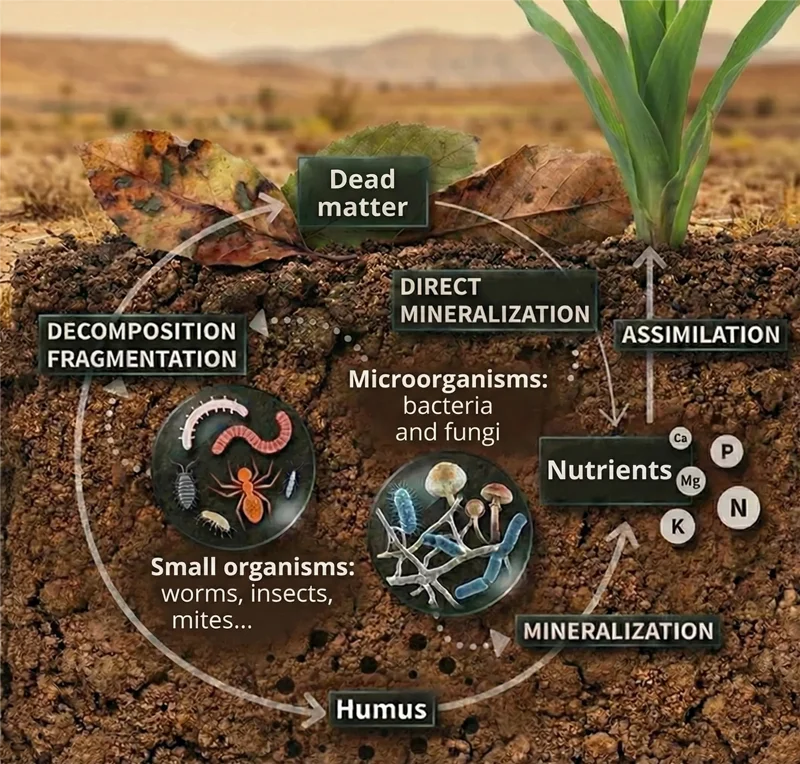
EF Polymer revitalizes soils by stabilizing moisture around the roots and reducing repeated water stress that degrades soil life. More consistent conditions promote biological activity (microflora, soil fauna) and support the balances related to soil organic matter (SOM/SOC).
Through its water absorption and release cycle, the polymer also contributes to a more favorable structure in the rhizosphere: improved porosity, aeration and reduced local compaction.
Result: a more resilient, functional soil that is better suited to crop performance.
Compatible with drip irrigation and desalinated water
In regions supplied with desalinated water through drip irrigation, farmers must deal with higher water costs and increased salinity if accumulation occurs.
EF Polymer helps stabilize these inputs by retaining water in the root zone and reducing irrigation frequency.
- More widely spaced irrigation cycles reduce water stress
- Reduces the impact of soil salinity through the retention and natural leaching of sodium (Na+)
- Suitable for all agricultural zones in Morocco, including semi-arid and arid regions
No additional equipment required
EF Polymer integrates naturally into existing practices: it can be mixed with water or applied directly along the planting line, without any additional equipment or investment.
Application protocols are simple, repeatable and adapted to each crop type, either manually or through mechanization.
Pilot and field trials
EF Polymer is being tested under real farming conditions using conventional methods and/or monitoring systems across various crops representative of Moroccan agricultural systems (vegetable crops, orchards, cereals, argan farming).
Initial results will confirm the expected benefits in water savings, fertilizer reduction and improved plant vigor.
These trials are led by institutional and scientific stakeholders for the benefit of farmers and cooperatives, with the purpose of validating usage protocols and adapting them to local constraints.

in Morocco
Need more information?
Contact us to analyze and identify your soil granulometry, assess soil improvement potential and define an EF Polymer protocol tailored to your crops and irrigation system.