Kosoba Ardia Testing

100% biodegradability within 12 months

EF Polymer is certified as fully biodegradable in approximately one year, thanks to its unique organic composition and a natural decomposition process in the soil.

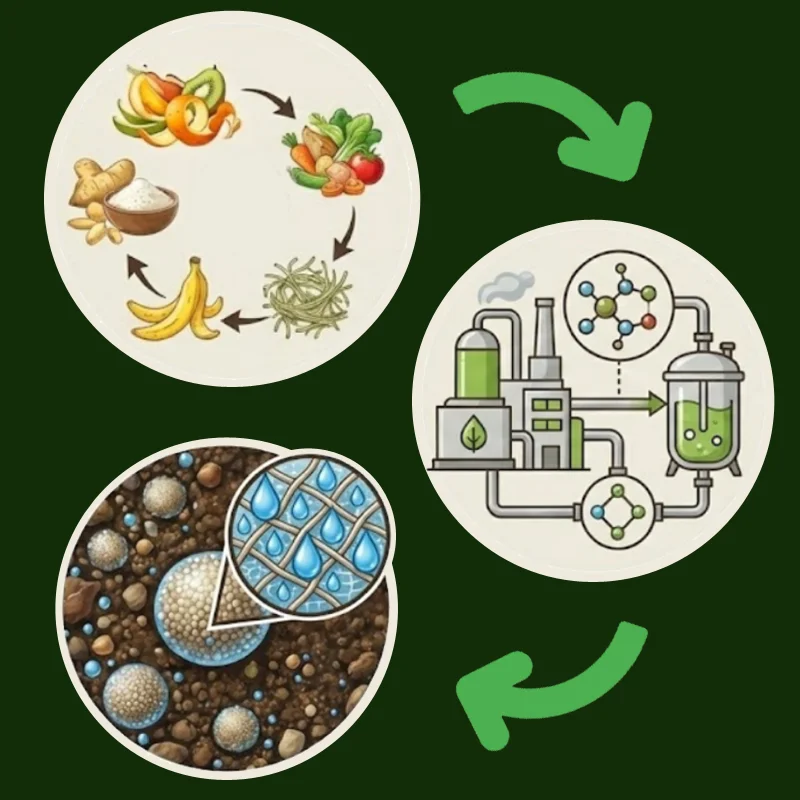
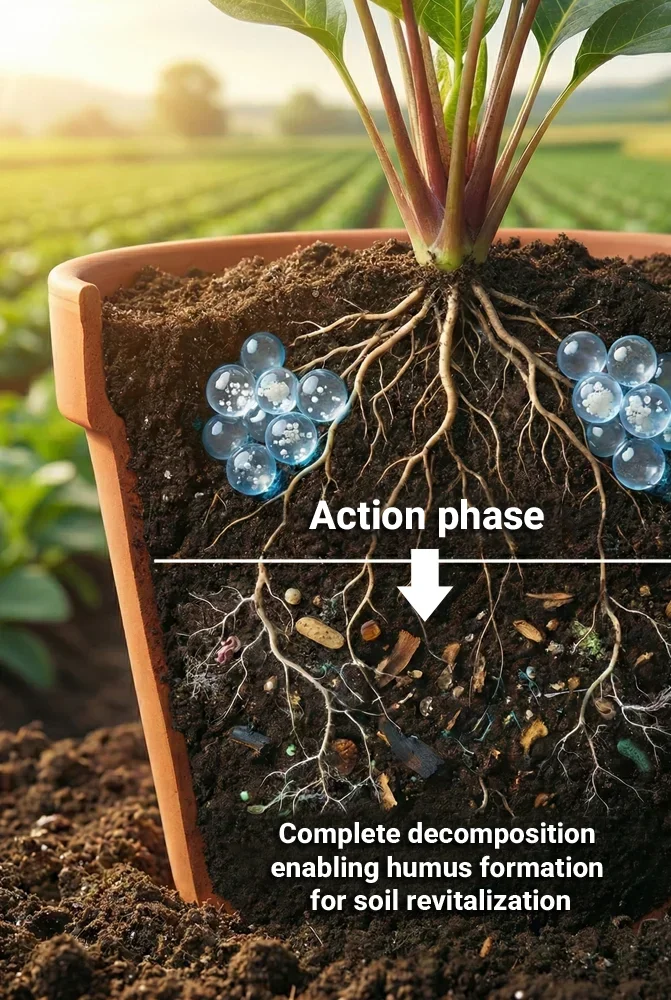
Derived from recycled plant-based materials, EF Polymer first acts as a hydrogel, then fully degrades in the soil in approximately one year, leaving no residue and transforming into humus that revitalizes the soil, in compliance with organic agriculture standards.

Bio-based and biodegradable composition

EF Polymer is the first 100% bio-based super-absorbent hydrogel, biodegradable within one year, made from bio-waste, including orange peels rich in polysaccharides.

Alternative to petroleum-based SAPs
Unlike super-absorbent polymers derived from petroleum, EF Polymer has a molecular structure that is recognized and easily degraded by soil microorganisms.

Duration of effectiveness and controlled decomposition

Concrete action : EF Polymer maintains its water and nutrient retention capacity during the main growth period, reducing irrigation and fertilizer needs while promoting higher yields.

After this period, soil microorganisms (bacteria and fungi) gradually begin to decompose the polymer, using it as a source of carbon and energy. Unlike synthetic polymers, EF Polymer’s molecular structure is designed to be recognizable and digestible by microorganisms.

Safe degradation by-products

After its action in the soil, EF Polymer fully decomposes through natural processes. This biodegradation results only in simple, non-toxic elements such as water, carbon dioxide, and organic matter, which naturally integrate into the soil.

Unlike synthetic polymers, EF Polymer does not generate microplastic pollution. It leaves no harmful residues in the soil, ensuring a sustainable and environmentally respectful agricultural solution.

Organic certification

Its rapid and complete biodegradability has enabled its approval for use in organic agriculture by several certification bodies (Ecocert in Europe and the United States and JAS in Japan).

Biodegradability and life cycle – technical perspective

Analysis of EF Polymer’s 100% biological degradation process and the absence of toxic residues.

Unlike conventional Super-Absorbent Hydrogels (SAPs) derived from petrochemicals (non-biodegradable polyacrylamides or polyacrylates), EF Polymer is a bio-based polymer. Its complete biodegradability is not accidental degradation, but an integral stage of its agronomic life cycle.

Bio-based composition: the foundation of biodegradability

The molecular structure of EF Polymer is composed of natural polysaccharide chains extracted from plant residues (fruit peels).

  • Carbon backbone: Principalement composé de cellulose et de pectine.

  • Cross-linking: Les liaisons qui forment le gel sont de nature organique, sans agents de réticulation synthétiques toxiques.

The three-phase degradation mechanism

The product is designed to remain stable and functional throughout the crop cycle (12 months), before degrading under the action of soil biological activity.

PHASE 1 :
physical fragmentation

After multiple cycles of swelling (absorption) and contraction (water release), the polymer structure begins to break down mechanically. It fragments into shorter chains, increasing the available surface area for microorganisms.

PHASE 2 :
enzymatic
attack

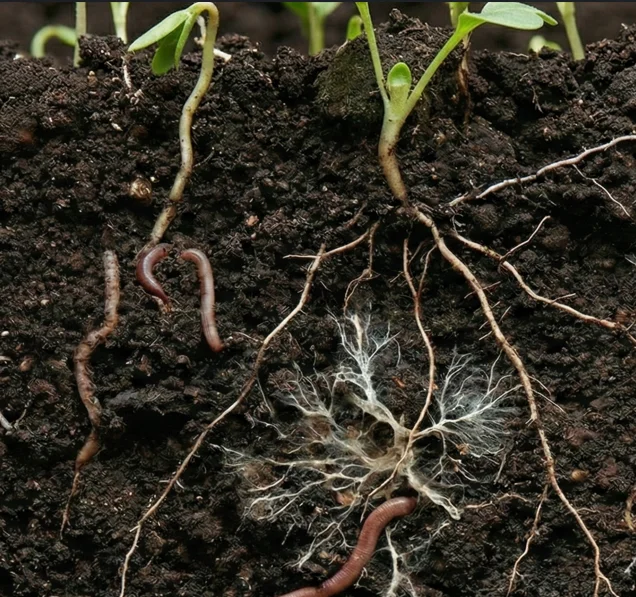
Soil naturally contains active bacterial and fungal microflora. These microorganisms use the polymer’s cellulose and pectin as a carbon source and release specific enzymes that break polymer bonds, converting the gel into simple monomers.

PHASE 3 :
mineralization and humification

During final biodegradation, EF Polymer is fully assimilated by soil microorganisms and transformed into water, carbon dioxide, microbial biomass, and stable humus. Unlike synthetic polymers, it generates no microplastics and fully integrates into the natural carbon cycle.

Positive post-degradation impact

The biodegradability of EF Polymer is not merely “neutral”; it is beneficial to the soil.

Organic matter enrichment (SOM)

As it decomposes, the product adds organic carbon to the soil. Arid soils are often very low in organic matter (<1%). The degradation of the polymer therefore contributes to the long-term regeneration of soil fertility.

No phytotoxicity

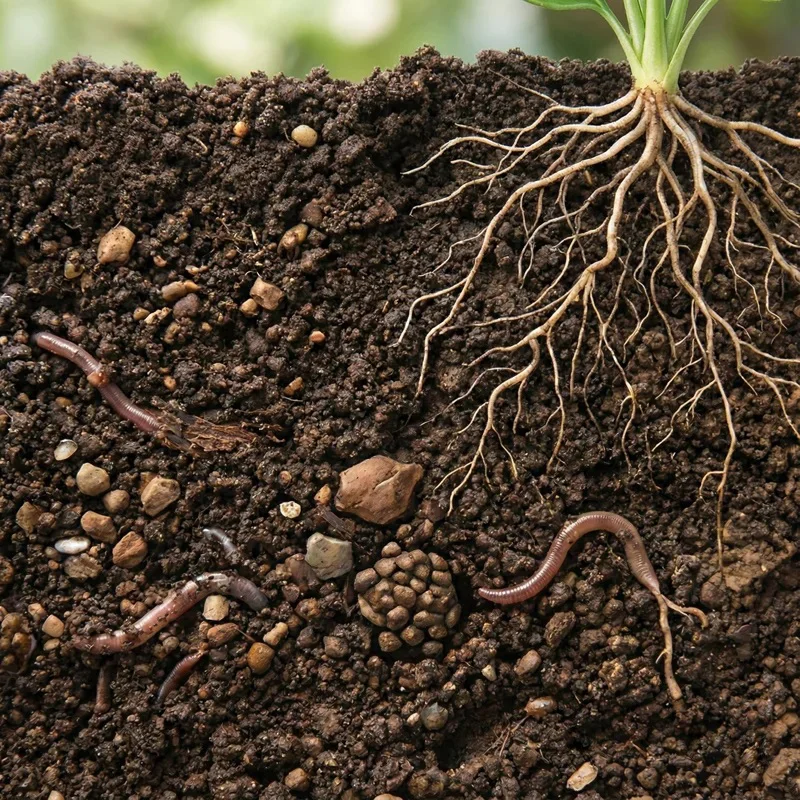
The by-products of degradation are completely harmless to soil fauna (such as earthworms) and to subsequent crops.

Learn more about the benefits of EF Polymer

Up to 20% less fertilizer

By maintaining moisture in the root zone, EF Polymer improves nutrient availability. Fertilizer requirements are reduced by 20% without compromising crop performance.

Up to 40%* water savings

EF Polymer retains water close to the roots and limits losses through infiltration and evaporation. Farmers reduce their water input by a proven 20–25% and up to 40%, depending on crops and soil conditions.

Significant additional yield

The use of the polymer optimizes water resource allocation, enabling the plant to redirect energy toward fruit production rather than root development, resulting in significant gains (e.g., for tomatoes: +46% marketable yield).